

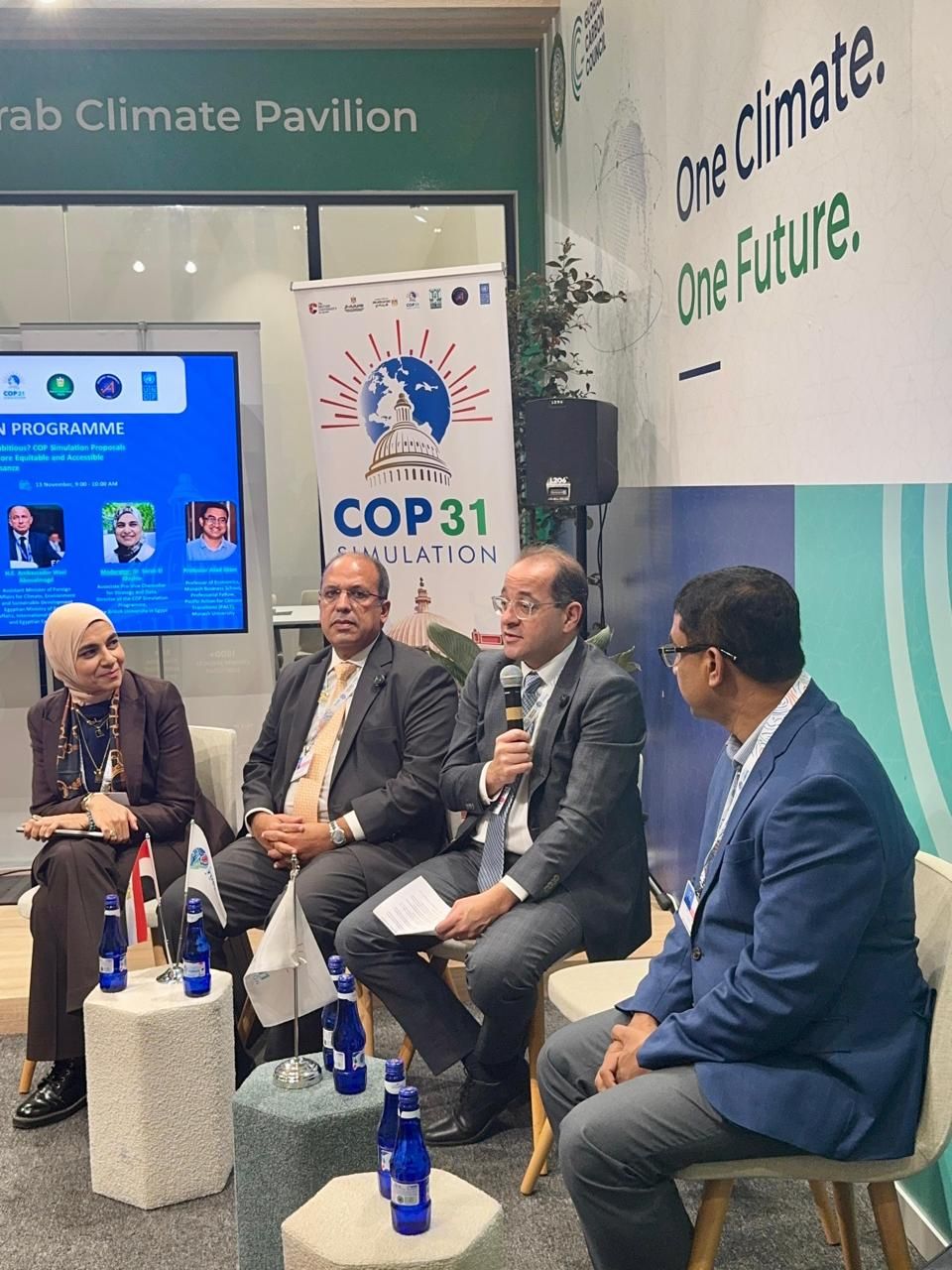
Finance Minister at a panel discussion during the climate conference in Türkiye: Developing countries face a growing challenge in financing climate action amid more pressing development priorities
Multilateral development banks must play a greater role in providing concessional financing to countries most vulnerable to climate risks
Increasingly frequent and severe climate shocks underscore the need for financing mechanisms that deliver liquidity rapidly
Innovative financial instruments are needed to address climate challenges
We seek financing on concessional terms with long maturities, alongside debt-for-climate investment swaps
The global financial architecture can play a more effective role in lowering financing costs and driving development investment
Finance Minister Ahmed Kouchouk said developing countries face a growing challenge in securing financing to address climate change amid more pressing development priorities and mounting pressure on financial resources. Climate finance must be more flexible and equitable, and more responsive to developing countries’ needs and economic circumstances, he said.
Speaking at a panel discussion during the climate conference in Türkiye, Kouchouk called for multilateral development banks to play a greater role in meeting the concessional financing needs of countries most vulnerable to climate risks. Such support would help these countries strengthen their capacity to adapt to climate change while maintaining efforts to meet their citizens’ basic needs.
Kouchouk said increasingly frequent and severe climate shocks underscore the need to develop more flexible financing mechanisms that deliver liquidity rapidly to affected countries, enabling them to respond immediately and limit the economic and social consequences.
He called for innovative financial instruments to address climate challenges, ease financing burdens on developing economies and mobilise more investment in climate and development projects.
“We seek financing on concessional terms with long maturities, alongside debt-for-climate investment swaps, to create greater fiscal space for developing countries and strengthen their ability to meet their climate commitments and development targets,” Kouchouk said.
The global financial architecture can play a more effective role in lowering financing costs and driving development investment, he added. He stressed the importance of improving international financing instruments and mechanisms to respond more effectively to developing countries’ needs and help them balance climate action with economic growth and sustainable development.
 Next article